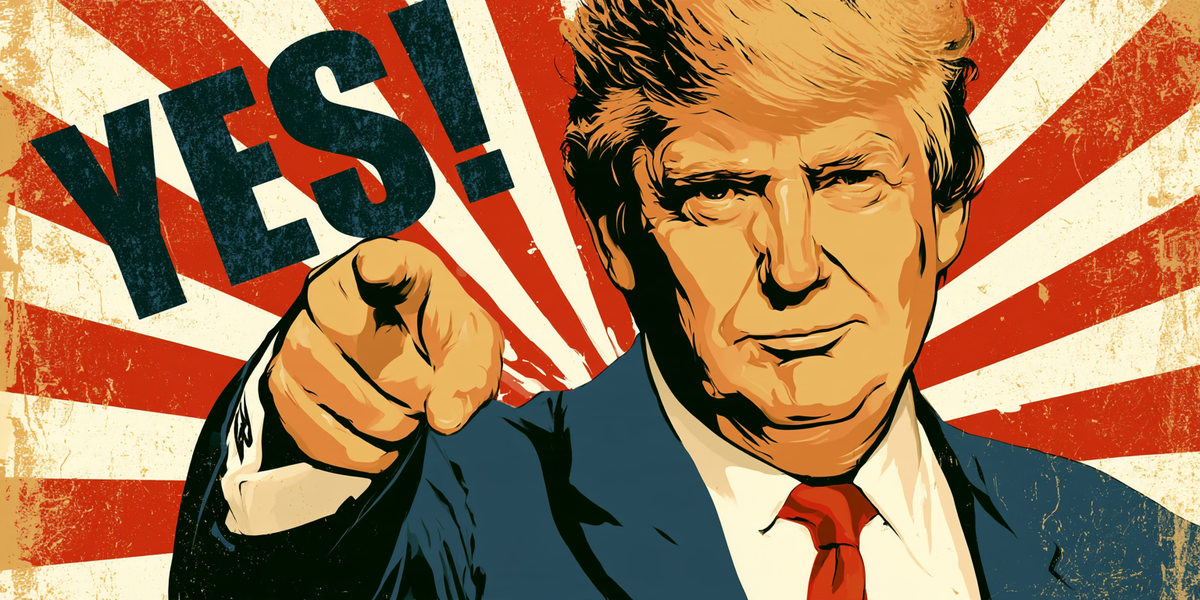
Yes, Mr. President!
One presidential phone call and Jensen Huang is back. Wall Street rejoices. The board may well have breathed a sigh of relief, though Huang's troubles have hardly gone away. As for the CFO who was never consulted and still has to sign the financial reports, she may be the one worth watching.

The factual cutoff for this essay is November 24, 2026. Statements of fact are based on public documents or published reporting. My speculations about what people are thinking, what they may have agreed to privately, and what might happen next can safely be read as fiction. Believing any of it is strictly prohibited. You do so at your own peril. Please do not supply insinuations on my behalf. I am principally interested in commercial negotiations, and nothing here constitutes investment advice. I hold no NVDA shares or related derivatives.
Read the Chinese version here.
What Happened
On November 17, Nvidia chairman Harvey Jones told investors that the board had no intention of bringing Jensen Huang back as CEO. Five days later, on Sunday, November 22, the board voted unanimously to restore him as CEO, president, and director. The announcement came on Monday morning. The shares went up 31.5 percent that day.
Curious enough. More curious still was the presence of a rather special participant at Sunday's board meeting.
The President of the United States had reportedly called into the meeting to persuade the directors to bring Huang back. Trump himself said in a CNBC interview on Monday that he had spoken to the board, directly or indirectly, and had persuaded them.
Those of us who live on the West Coast and enjoy a lie-in were at something of a disadvantage. At 7:45 somebody woke me up. "Stop sleeping. Get up and look at this."
I immediately posted two words: A miracle! My friends responded with considerable ingenuity. Evidently everyone had a theory.
I was rather confused myself. A board in reasonable possession of its faculties would hardly have made such a decision under the circumstances. I'd even written an entire essay about it! Then I read the news. Ah, the President himself had intervened. Well, that changed things.
About an hour later, I posted something to this effect:
If you ask me what I make of all this, I suspect the board is greatly relieved. Mr. Huang has regained control of the flow of information, though I see limited benefit to his personal predicament. Kress is probably the least cheerful of the lot. Her risks are still hers, and it seems to me that the California attorney general may have acquired an interesting new avenue of inquiry.
So, why do I think this?
It's easy enough to picture a group of independent directors capitulating to presidential pressure. If I were one of those directors, I might see things somewhat differently. Remember what I wrote in The Jensen Huang Affair: Irresponsible Guesses. Our heroes aboard the Orient Express each have their own preoccupations. They are hardly all in the same predicament.
The Board: A Most Providential Phone Call
An independent director has two rather immediate personal concerns. There is litigation to contend with, which may cost money, and a reputation to preserve, which may cost considerably more.
Then there is the stock market, and that enormous lacuna in Nvidia's corporate governance. Mr. Huang has dozens of direct reports and no publicly identified successor. The company has revolved around him for so long that finding a replacement at short notice is a formidable proposition. The stock market has made its feelings on the subject quite clear.
One of the more important legal concerns for the directors is their oversight duty under Delaware's Caremark doctrine. Did they make a good-faith effort to establish adequate oversight? Did they attend to the relevant warnings? As I mentioned in my earlier essay, there is already a shareholder derivative suit in federal court in California involving the directors' oversight responsibilities.
There are, as far as the public record shows, no criminal charges against the individual directors in connection with this affair. The California attorney general served Nvidia with an investigative subpoena on November 19. I imagine Mr. Huang and Nvidia will be occupied with that for quite some time. The directors have no reason at present to assume they are next in line for criminal prosecution.
What would be the most favorable position for a director? To put it in somewhat imprecise layman's English: we had the appropriate processes in place, we did what could reasonably be expected of us, and our decisions were justified by the information available to us.
Naturally, one would need evidence to sustain such an argument. A rather substantial if.
Letting Huang go in the first place put the board under enormous commercial pressure. The shares collapsed, employees objected, and some investors were distinctly unhappy. Keeping him might have complicated the directors' legal position and done little for their reputations. Letting him go had wiped out a spectacular amount of shareholder wealth. And who in his right mind wanted to take over the company at that particular moment?
So the President's phone call needn't have been unwelcome at all. The board might even have seen it as an excellent opportunity. It could have Mr. Huang back, with a little assistance from the White House. Questions about the board's independence were still there, of course, though they needn't all be settled while the President was on the telephone.
Here, at last, was an opportunity to negotiate.
Thank Buddha. Thank God.
If I were on the board (a misfortune from which Nvidia has been spared), there are two things I would particularly want to discuss.
I would want a clear assessment from the administration, together with an explicit assurance that, in its judgment, Huang's reinstatement is in America's best interests. Nvidia has said that the board took into account the views of senior government officials.
The independent investigation is still in progress. If the government could provide something substantial and relevant from people professionally qualified to make such an assessment, the directors might be in a better position to defend their decision to reinstate Huang. As for the past, well, the facts are what they are. The board might nevertheless find itself with a better hand.
The other thing I would want, naturally, is more financial protection for myself.
Nvidia has up to approximately $950 million in directors' and officers' liability insurance. What the insurance actually covers is another matter. Buying more insurance at this point might require an unusually optimistic insurer.
There are other possibilities, though. Indemnification agreements between the company and its directors, advancement of legal expenses, and so forth. If there were room to negotiate something legally permissible, I would certainly try.
One could also ask Huang to cooperate with the independent investigation, accept stricter compliance oversight, and agree to certain conditions upon his return. There may be other arrangements worth considering. All of this is my conjecture, of course. Whatever is agreed upon, in the present glare of publicity, will have to withstand quite a bit of scrutiny.
The trouble for Mr. Huang, as a negotiator, is that he showed his hand rather early. In his public statement on November 17, he had already expressed his willingness to return if the board thought it was in the interests of the company and its shareholders. Now he has the President's expectations to contend with as well. Imagine the President going to all that trouble and Huang still failing to get his job back. The disappointment would hardly be his alone.
Suppose I had already reconciled myself to the prospect of never working with Mr. Huang again. I would make quite extravagant use of this opportunity to reduce whatever future risks I could, both for myself and for the company. I might even look into a reshuffling of the board, with a view to making a respectable and reasonably prompt exit.
Again, that's just me.
We may never know what they negotiated, or how they went about it. What a pity! If they didn't make use of this opportunity to obtain all the legitimate protections they could for the company, I should have some reservations about their suitability as directors.
Just look at the situation. The President himself calls, the gentleman on the other side of the table is dying to come back, and you have all these cards in your hand.
Oh, do let me have a go.
Mr. Huang: Much the Same Predicament
Huang's decision to return puzzles me.
There may well have been considerations of marriage and family. At the November 24 employee meeting, he said it was the most difficult company meeting he had ever had, and the second most difficult meeting of his life. The first was a conversation with his wife.
Nor should we underestimate his attachment to a company he helped found and has run for more than thirty years. People have feelings. We cannot expect them to make every decision on the merits of a commercial calculation.
But the haste with which he has gone about this reminds me rather of that apology he rushed to publish on the company website. Perhaps he is short of an experienced and trusted adviser. Or perhaps he has rather too much confidence in his own judgment.
The Timing
On December 1, Huang is due to sit for closed-door, transcribed interviews with three House committees. On December 2 it will be Tim Teter's turn. On December 3, Huang is scheduled to testify publicly before the Senate Banking Committee.
What he has said to the President, the board, his executives, and Congress may all be examined together. There will probably be more interviews and hearings in the foreseeable future. Tim and Jensen may find themselves joined by some of their colleagues, including the CFO.
The President has also managed to make things a little more complicated for him. Trump said in an interview that he didn't think Huang needed to invoke the Fifth Amendment and publicly encouraged him to tell Congress the truth. A federal pardon was a possibility, though the President didn't think it would necessarily be needed.
Well, that's helpful.
If Huang exercises his constitutional right to remain silent, he may embarrass the President who has gone to considerable trouble on his behalf. If he testifies, what he says can be compared with the board's account, corporate records, and the testimony of other witnesses. He is perfectly entitled to invoke the Fifth Amendment. Doing so now happens to involve a small question of presidential etiquette.
Huang likes to communicate verbally. Other people may have different habits, particularly those in parts of the company where compliance requirements are rather stringent. There are a great many events he needs to go over, including the details of his conversations with the people around him. Good lawyers are indispensable, though they cannot do the remembering for their clients.
At this particular moment, I would be rehearsing answers twenty-four hours a day, and I'm not sure even that would be enough. Should there be any time left, there are plenty of interesting cases to study. Shou Zi Chew more recently, Howard Hughes rather further back. Seriously, I don't think full-time preparation would be excessive.
And what has Mr. Huang been doing? Talking to people, shaking hands, negotiating his return. He told employees on November 24 that he was receiving therapy. Now, just in time for the hearings, he is back at work with more than sixty people reporting to him.
I haven't even mentioned that the independent investigation is still going on.
With so many people already examining what has happened, the last thing he needs is an additional pile of matters to explain. Yet there he is, back at the center of every decision, every flow of information, every person and every contract.
Mr. Huang could really do with somebody who has the nerve to tell him no.
Incidentally, Bloomberg reported that Nvidia's general counsel, Tim Teter, personally contacted Commerce Department officials in 2025 about the Megaspeed investigation. There were differing accounts of whether senior Commerce Department officials had authorized direct contact with BIS investigators. Department officials subsequently disputed that they had given such explicit prior authorization.
Tim will be appearing before Congress on December 2.
The Act Itself
More troublesome is the act of returning to power.
Huang is once again CEO, president, and director of Nvidia, and the company's independent investigation hasn't finished.
He is back at the center of Nvidia's information flows while an investigation is in progress. What documents he sees, what he learns, and what instructions he gives may all become relevant to subsequent litigation. There is also the question of what the company can be said to know when its CEO knows something, and the rather awkward business of maintaining the independence of the investigation.
Many of the people reporting to him may become witnesses. Reassuring them, rewarding them, disciplining them, or moving them to different jobs will require considerable care. The acting CEO has just told employees that salary increases and additional equity awards will be brought forward to December. Kress made the promise. Mr. Huang now has to implement it.
Rather tricky, that.
He once spoke quite proudly of his relationship with TSMC, saying that they had no formal legal contract between them and that their relationship was based on years of accumulated trust. I've always found that sort of arrangement rather charming. Several years later, should somebody ask precisely what was agreed upon, the romance may be a little harder to sustain.
From now on, every significant thing he does at Nvidia is liable to be examined under a microscope.
The Alliance
Perhaps the most ill-advised thing he has done is to tie his fortunes so closely to those of Mr. Trump.
The Republicans lost control of both houses of Congress in the November 3 midterm elections. The Democrats will have the majorities in the incoming Congress. Trump's intervention in Huang's reinstatement has already attracted renewed congressional scrutiny of Nvidia and its relationship with the administration.
This President has another two years or so in office. From January, congressional investigative power will be in the hands of another political party. One might have thought this a rather unfortunate moment to acquire so conspicuous a patron.
And the support of the federal executive only gets Mr. Huang so far. The California attorney general has served Nvidia with an investigative subpoena. The President cannot decide how that investigation turns out. A federal criminal pardon, were it ever needed, would leave state criminal jurisdiction and private shareholder litigation untouched. Any civil remedies pursued by the SEC have their own legal procedures. Presidential absolution has its jurisdictional limitations.
Just saying, even Elon Musk has started putting a little distance between himself and the President, declaring that he isn't MAGA. Mr. Huang, at this particular juncture, has elected to upgrade his friendship with a gentleman he first met in early 2025.
Machiavelli would probably have had a few things to say about the arrangement.
I really don't think it was a wise decision. And once again I find myself wondering whether he has a trusted adviser, preferably the sort who can occasionally ask, "What on earth are you doing?"
You see, there are many things in life which, while we await them, seem to hold almost limitless promise. Then they happen, and a curious amount of the magic evaporates.
As I wrote in Breakfast at the Edge of the Compute Bubble: One Year Later, I believe the AI bubble will burst and the problems associated with circular financing are real. Nvidia's shares fell sharply when Huang left and shot back up when he returned, taking much of the market along for the ride. I doubt his return changes the direction of things.
I do hope everyone made good use of this unexpected and rather generous gift from the market.
Kress: A CFO Unconsulted; a CEO Uninformed
Colette Kress is in a rather interesting position.
According to Bloomberg, the board didn't consult senior management before deciding to bring Huang back. Management learned of the decision at the last moment. Kress was the acting CEO, yet nobody thought it necessary to include her in a discussion about the imminent termination of her tenure.
I think that tells us a little about the board's priorities.
What Kress really needs to think about now, I suspect, is how to protect her own interests. Mr. Huang has about sixty direct reports and she is one of them. She is also the CFO, which means she has to certify the company's periodic financial reports separately from the CEO.
She cannot possibly examine every commercial contract herself, and she isn't directly responsible for export control compliance. Financial reporting, material financial disclosures, and the relevant internal controls are, however, very much her business.
This is why she and the directors aren't quite in the same boat. Kress is herself a defendant in the November 11 shareholder derivative suit, and she has the additional responsibilities that come with certifying financial reports. At an executive meeting she is merely one of the sixty or so people reporting to Mr. Huang. She has even, according to Reuters, disagreed with him over some of the larger financing arrangements.
The other executives can each explain the limits of their respective responsibilities. Kress still has to account for the reports she signed.
I've been thinking about those handshakes of Mr. Huang's. From a CFO's point of view, a handshake acquires an entirely different character once it has a dollar value attached to it. Whatever the origins of a commercial commitment, once it becomes a material financial obligation she needs to understand it and explain how it was accounted for.
Were I Kress, I would be going through the reports I had signed, the information I had relied upon, and considering whether I ought to have legal advice of my own. Mr. Huang's reinstatement does very little for me in that regard.
If Kress has the records to demonstrate that she has properly discharged her responsibilities as CFO, she may actually be in a reasonably favorable position. Those records would help her establish the limits of her own involvement in the company's decisions. She could also be a particularly useful witness for anyone trying to understand how Nvidia has been managed.
That's why I mentioned the California attorney general on the day Huang returned. Imagine trying to understand the financial affairs of a company of this size. Here is the person who knows the company's finances and has an excellent reason of her own to get the history straight. Where better to begin?
The fact that she wasn't involved in the reinstatement decision gives her further reason to distinguish her own position from that of the board. Reuters reported on November 20 that SEC investigators were looking at possible accounting issues at Nvidia. The precise scope of the reported inquiry remains unclear.
And there is a much more interesting date ahead of us. The next 10-Q.
Nvidia has announced its third-quarter results but said the formal 10-Q would be filed in the coming weeks. As long as Kress remains CFO, she has to certify it. She has just been excluded from the decision about who will be running the company, and now has to sign its next financial report with the SEC reportedly taking an interest in its accounting.
The board can change its chief executive on a Sunday. Kress still has to account for what she signed in the past.
And here she is, back among Mr. Huang's sixty executives, reporting to a man who, according to The Wall Street Journal, once described her at a meeting as looking like a deer in headlights.
Why did the board think it could make this particular decision without telling her beforehand? I find that rather more interesting than the fact that she was CEO for all of ten days or so.
It also makes me suspect that, whatever the board and Mr. Huang were negotiating on Sunday, there may have been nobody at the table representing her interests.
Rather delicate, isn't it?
What Next?
There will probably be more litigation, more hearings, and a good deal of investigative journalism.
At least the scheduled House interviews and the Senate hearing haven't been canceled merely because Mr. Huang has returned. Nvidia's own investigation is still in progress.
Of course, the Democrats may decide that there are other things worthy of their attention. Healthcare, for instance. That would probably be good news for the American people, including Mr. Huang. Within our rather narrow little world of technology, though, the next year or two could be quite turbulent.
Those of us in the cheap seats might as well watch the show.
Leaders lead. Workers work. Liars lie. Cheaters cheat. And we bystanders stand by.