
Breakfast at the Edge of the Compute Bubble
AI's killer app hasn't shown up for breakfast yet. We're building infinite highways for cars that don't exist. The highways are very nice, though.

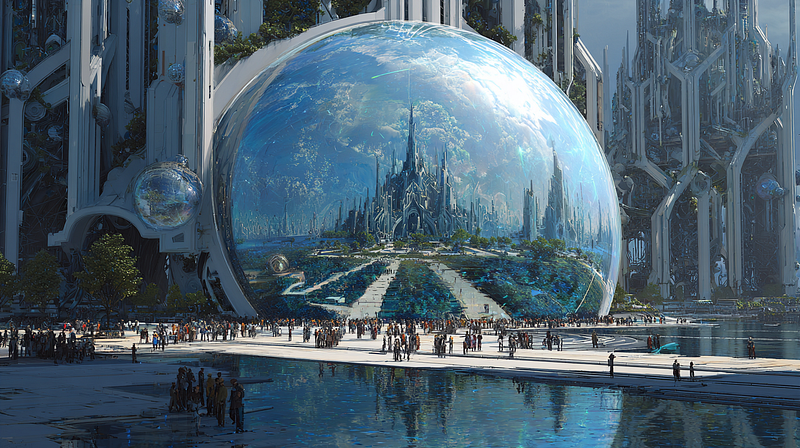
From highways to bandwidth to GPUs: the same story, rewritten in silicon.
Just saying... why I write this piece is in the p.s.
Disclaimer: Fun to read for fun. Not to be taken as financial advice or anything serious.
The News
We know money constantly outpaces significance. We just keep pretending that this time it will be different.
We're seeing the world's most valuable chipmaker invest in its own consumer, and the market deems it brilliant. The move is astute, yet it also runs in circular: a shovel-selling company is now funding miners to dig. If you ask me, I'd say the mountain is becoming too congested.
This is what takes place when progress turns into a religion. We're not adding compute because people want them. It's being made because capital has forgotten how to stay still. It's been a while.
"Cloud" sounds like a dreamy, faraway figure of speech. The real cloud, which is made of wires, silicon, and coolant, hums all night long, though. We say it's the future all the time. It's just less appealing to hail for the building.
The news about demand is still behind. The "killer app" for AI has not yet been made public. There are no cars on the roads we are building. It's clear to everyone. It's not talked about at the party.
Power is now the problem. The next model that is being trained will compete with towns for water, air, and light. Our air conditioner is different from a computer center. We're going to lose the discussion, that much is clear. We won't know until the grid makes its choice in July in Phoenix.
The Olds
We've seen this before. In the year 2000, the only news was about the dot-com. If "dot-com" was written on the back of a napkin, all pockets were open. People built too quickly, too loudly, and too expensively to follow a dream that the world wasn't ready for. The bubble then came and wiped out half of the valley.
The cable stayed when the market went down. Twenty years later, that overbuild is what the internet is made of today. So maybe this is the same story all over again: an unnecessary extravagance that needs to happen before the next quiet age of usefulness. That's the strange part.
If we go back 100 years, we might notice it always goes the same way. The roads came first. They were made of concrete before most families had cars. The fiber was then sent across seas before anyone knew what to do with it. Now do the math. A lot of GPUs are spinning for races that still can't walk. Every age adds too much too quickly.
Maybe that could be the way to go. That could just be how we explain the credit card bill.
But the builders are rarely saved by the build-out. During the height of the dot-com boom, Cisco was the world's most valuable business. It was the leader in routers and switches and a sign of endless demand. The internet kept going. Cisco lost the top spot. Things were fine after the world said "thank you" and went on. Also, Cisco is still fine. Fine, but not NVIDIA-fine.
The Future
That being said, NVIDIA may be backing OpenAI not just to make money, but also to keep it safe. This could be the start of financialized computing, in which computing power is bought and sold like gas. Soon, we might be able to buy tomorrow's compute like power companies buy power for next year. Secure it, hedge it, and hope our guess was right. Even the reason hasn't caught up, the show must go on. Capital often thinks that way.
OpenAI needs money. NVIDIA wants to be sure. Oracle longs gravity. Microsoft, Google, Meta, and Amazon are all putting down concrete and looking for the same goal. All of the freeways—280, 880, 580, 680, and 780—are being built right now, even though there aren't any cars on the roads yet. Each builder is sure that their road is the one that will be used. Of course, there is only one Palo Alto.
And, it is not only with NVDIA or OpenAI, or the companies mentioned. We are expecting the largest IPO in 2026, and we are seeing everything happening around it, and lots of supporting balance sheets.
There's no way anyone can afford missing the race. They keep spending because they are afraid, not because they have faith. That's how terrible history is: not everyone will win. In fifty years, not all of them will still be around.
We build until then. We keep putting GPUs on top of each other, writing code, and giving the dream food. But will we still be the same people when the sun shines on us?
p.s. from someone has been in the valley long enough
As for dot-com, it wasn't just the builders who built too much. It was everyone who watched the number go up, worried about missing the boat then bought at the hight of the market. The dream was democratic. So was the damage.
See, the bubble needs buyers, and most of the buyers weren't stupid. They were just people who wanted to believe the story, who saw others getting rich and felt the specific fear of being left behind. That fear is unfortunately, very human.
And when it ended, the normal people paid first. Engineers who moved their families from India, from Beijing, from Taipei, watched stock options turning into a piece of paper. Careers stopped. Families moved back or spent years climbing back. The number on the balance sheet was always clean. The life underneath it wasn't.
Just remember that.