
Two Ways to Survive a War
Schindler's List used restraint. Life is Beautiful used charm as a trapdoor. Two films, two impossible situations, two completely different survival strategies. What they reveal about storytelling, moral courage, and the limits of hope.

War rescue movies normally present themselves with explosive images of machine guns combined with slow-motion battleship pirouettes during Dolby Atmos presentations to audiences. And there is another version: the whispered tales remain in our memories despite their soft delivery — or maybe because they are tiny whispers, like someone sneezing in a cathedral.
Take Schindler’s List. The film could have become a full-scale blockbuster through swelling orchestras and heroic speeches but Spielberg decided against this approach. Nope. Black and white visuals, long periods of silence, and powerful emotional moments featuring the girl in the red coat formed the film’s content. Through his magnifying glass gesture he revealed something important which you should really understand — like, “Notice this. Really. Don’t blink or you’ll miss it.”
Then there is Life is Beautiful. The movie takes a contrasting approach through its comedic elements and its father’s juggling of life and love until tragedy suddenly pulls the rug from under viewers. Charm as trapdoor. Throughout the 116 minutes viewers laugh before feeling sorrow and then wonder why life hates them so much — it’s like being tickled while someone quietly sets your chair on fire.
Both films were modestly budgeted. Both became global sensations. Both have entered that weird club of war movies people either rewatch obsessively or avoid like Newark airport during rainy season (although I truly adore NYC).
Survival in the box office arena exists through various methods — some subtle, some lucky, some mildly absurd.
The Comfort Zone Principle
Spielberg and Benigni both knew one thing: their emotional comfort zones.
Spielberg had cold clarity, big history, emotional punches placed like Lego bricks that you could step on barefoot.
Benigni operated his comedy engine at maximum speed even in a concentration camp. Watching his film is like watching Home Alone on the Titanic: slapstick while everything else sinks.
Why we care? War movies are emotional landmines. Overdo the sentiment, credibility blows up. Overdo the cruelty, and your audience needs therapy — and maybe a stiff drink. These directors stopped just in time.
The Audience’s Psychological Budget
Every viewer enters a war movie with an unspoken ledger. How much history can I track? How much suffering can I endure before crying into my popcorn? Push too far and congratulations, you’ve given someone an existential headache — the kind usually reserved for taxes or folding fitted sheets.
So the combinations:
- Grand history plus restraint: Schindler’s List, Saving Private Ryan. Emotional anchor points are your life jackets — the red coat, the handshake, a whisper of humanity. Without them, the ship sinks.
- Small personal story plus strong contrast: Life is Beautiful, Hacksaw Ridge. Quick ignite, high emotional voltage, easy to connect. Chaos everywhere, but the heart finds a pulse anyway.
- Small personal story plus restraint: The Zookeeper’s Wife. Subtlety feels small. Audiences can nitpick like cats judging furniture they will never sit on.
- Grand history plus strong contrast: Pearl Harbor. Everything maxed out: explosions, love stories, slow-motion heroics. Fun? Yes. Memorable? Depends if anyone noticed the plot under all the CGI.
It’s like cooking. One missing condiment and diners yawn. One extra spice and they only remember the burn, not the flavor.
Where Dongji Rescue Might Land
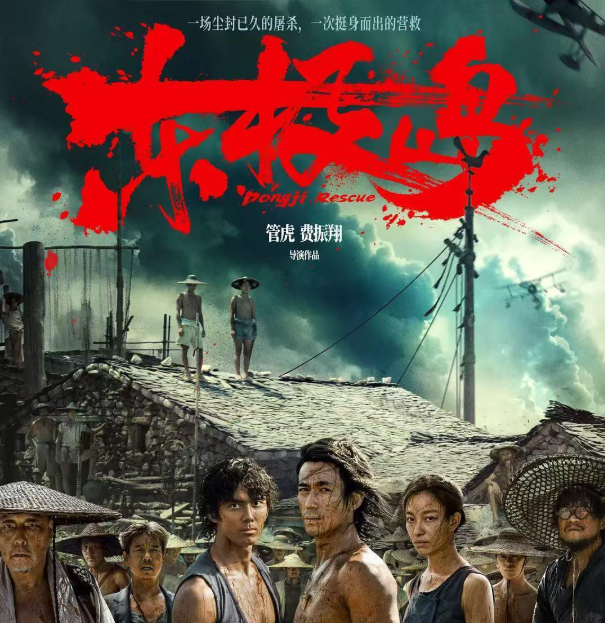
Dongji Rescue, a Chinese film about the Lisbon Maru rescue, will arrive in US theaters on August 22. Wild, right? Out of nowhere, a story about a little-known World War II maritime disaster lands in American theaters. I know, and that’s why I’m curious.
Here’s the scoop: The Lisbon Maru, a Japanese cargo ship, carried 1,800 Allied prisoners of war, mostly British. When torpedoed by a US submarine, chaos erupted. Ships sank, POWs flailed in the water, and ordinary civilians somehow got swept into the mess. In a heroic twist, Chinese civilians rescued 384 people — courage, luck, and probably soggy socks in heroic proportions.
Dongji Rescue aims to illuminate forgotten history, showing ordinary people caught in extraordinary circumstances. The story contains the classic archetypes:
- Cruel invading forces, check, Schindler’s List territory.
- Ordinary civilians swept into history, check, Life is Beautiful territory.
The question: will it whisper, shout, or go full fireworks in a library?
The Drop of Honey
Consider this: a man chased by a tiger falls off a cliff. Snake below, two mice gnawing at the vine, time slipping away, and then he sees a drop of honey on a leaf. He tastes it. His fate remains unchanged, but his experience changes.
War movies and real-life rescues work the same way. The tiger is history — massive, merciless. The snake is immediate danger, ready to snap. The mice are time itself, nibbling relentlessly while chaos reigns. The honey? Tiny human sparks that make all the difference, like a perfectly timed Friends punchline in the middle of a bleak Monday.
In the case of the Lisbon Maru, 384 people were plucked from almost certain death. Imagine the horror of the water, the panic, the weight of history bearing down, and then those 384 drops of honey — moments of courage echoing far beyond the waves. Tiny victories screaming, “We are alive. And we are laughing too.”
If Dongji Rescue finds its honey, it might stick in memory long after the last battle fades. And maybe — just maybe — I will laugh, wince, and marvel all at once. Which honestly is why I go to war movies in the first place.