
The Lychee Road: It Is So Not About Lychee
An empire mobilizes everything for a single lychee. The fruit gets delivered. The consort doesn't eat it. This isn't about the fruit. It's about us.

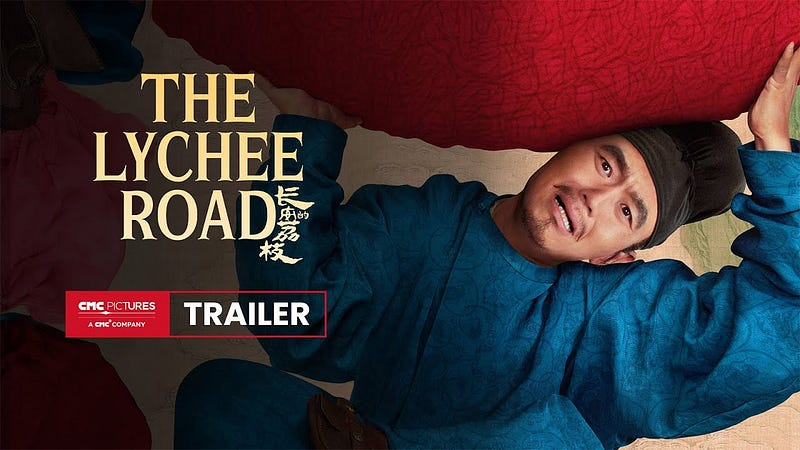
A Reflection on Absurdism, Bureaucracy, and Why We’re All Chasing Fruit Sometimes
You know the kind of movie where someone says “bring me fruit,” and the entire empire spirals into a logistical fever dream? Yeah, that one. But don’t be fooled by the period costumes and embroidered sleeves .
This isn’t about litchis. Not really.
At first glance, the movie presents itself through lush visuals and exquisite historical aesthetics.
The visual elements of Tang Dynasty rituals, regional foods, and carefully layered garments together create a vivid connection to an ancient yet familiar world.
Below this visual abundance exists a different reality. Something colder and sharper . And no, it’s not about the fruit going bad. The absurdity develops slowly while being concealed by imperial formalities.
It’s a story about how an empire builds a tower of meaning on something that never had any. And somehow, the impossible task is completed.
The cinematic production functions as an adaptation of Godot but features continuous motion
In Waiting for Godot, Samuel Beckett’s characters wait endlessly for someone who never arrives. The characters in The Lychee Road rush instead of waiting since they do not pause at all. The characters ride horses at high speeds, exchanging them at designated stops. They remain focused on planning, despite delays and mounting pressure.
The central question persists unchanged throughout the narrative.
What are they running toward? And why?
The central focus of the film revolves around a single comment made by the emperor: “The imperial consort enjoys fresh litchis.”
A temporary preference transforms into an absolute imperial command. And from that moment, the entire bureaucracy of the Tang Dynasty is mobilized.
The task’s absurdity lies in its lack of clarity , yet it is this very vagueness that drives the system into overdrive. The machine moves not in spite of uncertainty, but because of it.
Three stages exist in the process of meaning creation which begins with fiction followed by rationalization before reaching self-justification.
The movie presents a quiet yet absolute demonstration of institutional practices that generate artificial meanings before defending these creations at all costs.
1. Fiction
The story opens with a royal decree that lacks intrinsic value because it represents a spontaneous imperial wish to satisfy his favorite consort. As soon as the imperial machinery starts operating the mission transforms into a sacred expression of imperial authority. None of the characters challenge the logical foundation or monetary costs or potential challenges of this decision.
So it is decided: the litchis must be delivered to Chang’an. After all, what’s an empire if it can’t express love via extreme produce logistics?
The fruit transforms into something beyond its natural form. The object has transformed into a symbol of loyalty as well as competence and order and national pride.
2. Rationalization
The officials who participate in the process create their own explanations to validate their actions:
- “This is a test of loyalty.”
- “If I succeed, I’ll be promoted.”
- “Failure would be a stain on the Empire.”
The emperor’s reasons remain a mystery to his subjects . That mystery is what gives the order power.
3. Self-Justification
After resources are spent and risk mounts while sweat pours during the running operation , the truth about the goal’s genuineness becomes irrelevant at this point.
It must matter now. Because we already gave everything.
Systems function through a specific mechanism. Not by convincing you to believe, but by exhausting you until belief is easier than resistance. Once you’ve poured in enough effort, meaning starts to feel inevitable , even if it wasn’t there to begin with.
Maybe that’s why we finish projects we stopped believing in halfway through . Maybe we don’t have to explain to our manager why we stopped is good enough.
A Grand Absurdity, Stitched in Silk
The movie exists outside the category of historical drama. The play functions as a well-presented absurd theatrical production. The play features elements from Beckett but combines them with elements found in the works of Ionesco, Pinter, and Albee — Beckett’s existential inertia is mirrored in the mindless momentum of the mission, Ionesco’s circular and meaningless dialogue is reflected in the bureaucratic scripts the characters follow, Pinter’s looming threat and ambiguity echo in the undefined stakes of the delivery, and Albee’s surface civility masking deep emptiness parallels the elegant yet soulless operations of the Empire.
The characters in the The Bald Soprano talk constantly yet they convey no meaningful information. Just like every character in this film performs their duty, utters the proper lines — The litchi delivery serves no purpose because no one dares ask about it.
A person faces questioning and punishment yet no one reveals what his offense actually was in The Birthday Party. Our protagonist shares the same experience as the low-level functionary who receives national assignment while facing the overwhelming importance of his task without any clear explanation of what is at stake.
In A Delicate Balance, every surface of the world appears normal and polite until you discover that the souls have disappeared from them. The Empire in the film operates with flawless efficiency and elegant sophistication and unbreakable stability. And utterly insane.
Absurdist expression manifests itself through procedural language which operates in whispers. The perfect uniforms and perfect bows conceal its existence. The organization presents you with an impossible assignment before offering a smile of approval that says: The nation will benefit from this action.
The audience watches as the most skilled minds and precise infrastructure of the Empire reach their breaking point to fulfill the solitary hunger of a woman. The most profound absurdity emerges from the intense drive coupled with flawless precision.
At the end, she didn’t even eat the fruit.
East vs West: Absurdities in Translation
Western absurdism, particularly in the works of Beckett and Camus, often stems from existential despair : the dread of a meaningless universe and the futility of human agency. The characters wait, stall, question, and gaze into the void.
Chinese absurdism, as portrayed in The Lychee Road, emerges from a different place. Here, meaning is not absent but oversupplied , they are layered in ritual, hierarchy, and performative purpose. The absurd lies not in emptiness but in excess: the fruit must be delivered not because it matters, but because meaning has already been assigned from above.
In one, people ask “why are we here?” and hear silence. In the other, people are told exactly why they’re here . No one dares to question it.
And yet both converge in a shared emotional truth: the individual caught in a system too large, too polished, too sacred to resist. One runs because the void is unbearable. The other runs because stopping would break the spell.
What The Lychee Road does masterfully is stage this Chinese version of absurdity using Western theatrical grammar. The result is strangely universal . A satirical drama in imperial robes, fluent in both Confucian submission and Kafkaesque futility.
That’s the beauty of cross-cultural absurdity: it might not sound the same in every language, but it hits you in the same place.
Western absurdity is personal. Eastern absurdity is systemic. But both leave you running in circles.
There Are Litchis in Our World, Too
The film delivers its impact because: Though set during the Tang Dynasty, the story unmistakably reflects modern administrative processes. Every establishment where people continue running without ever questioning their reasons exists throughout the world. In any organization people receive general orders from superiors which transform into absolute commandments for subordinates.
- That pointless KPI we stayed up all night for?
- The document went through revision after revision, hoping someone important would notice it… but no one did. Maybe no one ever read it. But hey, at least the margins looked great.
- That deadline no one explained but everyone feared?
That’s our litchi. We have already begun our run. Everyone in our vicinity has already accepted the importance of this mission from us.
Clarity Is Survival
At the end, the main character also learns the truth:
The true purpose of this assignment involved more than fruit. The real objective was to demonstrate that the machinery continued functioning without question to prove the emperor’s will was still being carried out. Yet normal people are the collateral damage.
He doesn’t overthrow the system. He just stops believing in it.
Along the way, he comes to grasp the full cost of the journey . It's not just in physical toll, but in what he gave up: his relationships, his principles, and pieces of himself he thought were untouchable. He pushed away the very people who once helped him, too consumed by duty to notice their fading presence. To reach his goal he had to transform into a character who displayed both coldness and manipulative behavior. He understands that this expensive and exhausting process brought no value to his existence.
Being clear-minded doesn’t mean doing nothing . It just means you’ve started asking the right questions. It is not cynicism. Clarity represents the refusal to surrender your enthusiasm to artificial constructs. A person selects the silence of their moral awareness instead of following the artificial sense of urgency created by others. You select the internal voice of your conscience above the external demands of obedience.
Final Words: Not Just a Delivery, But a Mirror
The film’s strength lies in blending meticulous historical recreation with a bold, satirical lens — offering both aesthetic richness and critical depth.
The empire will go to extreme lengths to create a false requirement while the public stays unaware of its fabricated nature.
So I deeply appreciate Ma Boyong for creating this narrative. I mean, who else dares to expose national absurdity via fruit drama? This tale presents a time period from a thousand years ago, but its absurdities, hierarchies, and blind obedience reflect patterns still visible today. The historical backdrop serves as a mask for systems that remain embedded in modern institutions, making the story’s critique not only timeless but urgently relevant.
This isn’t just a film about fruit or feudalism . It is an allegory for any modern system where symbolism replaces substance.
It’s about us.
This isn’t just a Chinese story. It’s an intercultural mirror reflecting the absurd mechanisms we all silently obey.
Epilogue: Waiting for the Lychee
I don’t know about you, but watching The Lychee Road felt like slipping into a dream , the one where you never quite know why you’re here, or how you got here, but you still have to finish it. (Christopher Nolan would be proud.)
So the imperial consort loves lychees. Big deal, right?
Maybe Ma Boyong chose this subject as part of his usual style of “small entry, grand system” — using minor acts to unveil imperial structures. But as I watched, one particular thought came to mind:
“Everything becomes… too late, finally. You know it’s going on… up on the hill; you can see the dust, and hear the cries, and the steel… but you wait; and time happens. When you do go, sword, shield… finally… there’s nothing there… save rust; bones; and the wind. ”
“We must have that put in Latin.” — Edward Albee
Good night, to everyone out there running for a lychee.