
The Catastrophe of the Missing Nail
From fool-proof to fast-fix — and the quiet decay of engineering conscience

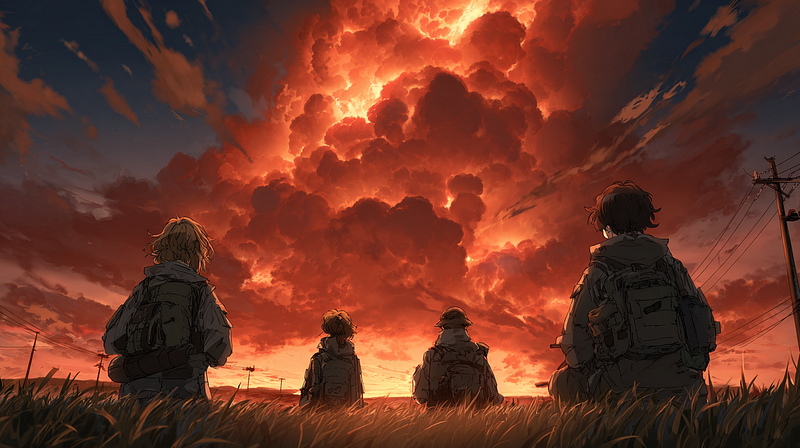
From fool-proof to fast-fix , and the quiet decay of engineering conscience
It always starts small. A missing nail. A skipped test. A line of code someone swore they’d double-check but didn’t because lunch ran long and the meeting was already starting.
History doesn’t crumble from villains twirling mustaches. It falls from people who were tired, confident, or just in a hurry. The kind who say, “It’ll probably be fine.”
That’s what keeps me up at night.
We’ve built machines smarter than our systems and dumber than our instincts. They hum and respond, design and predict, and somewhere deep inside their trillion calculations they guess wrong . It's not out of evil, but probability.
The fear isn’t that AI will turn on us. It’s that we’ll keep trusting it long after it’s stopped making sense : confident, articulate, statistically certain, and fatally wrong.
The Age of the Missing Nail
Once upon a time, failure had a fingerprint. A bridge collapsed, and you could trace the crack. A rocket exploded, and the weld was right there in the blueprint. Every disaster had a culprit, a lesson, a face we could look in the eye.
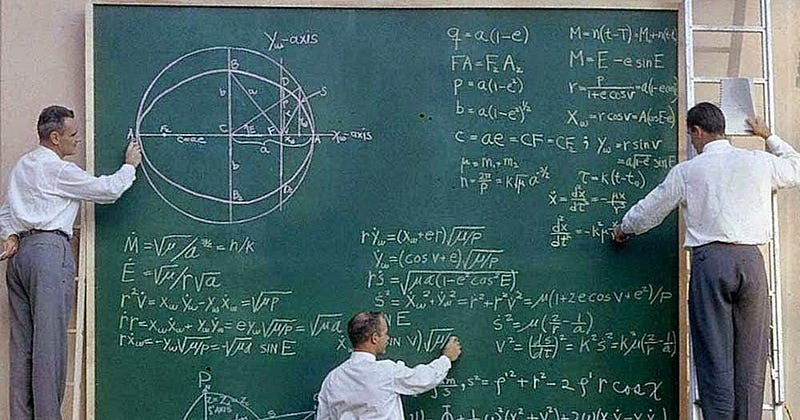
As for software, back then we tested until our eyes bled. Unit tests, functional test, integration tests, regression tests, system tests , and the whole brutal ritual. Then came code freeze. No new features. No surprises. Just a final sweep for the bugs that could bring the whole thing down. We delayed launches, sometimes for weeks, sometimes for pride, because one rule was sacred: no S1s in production.
It wasn’t perfectionism. It was respect , for the machine, for the user, for the quiet responsibility of building something that couldn’t afford to fail.
We used to give our disasters names. Challenger. Chernobyl. Therac-25. Each one tragic, but each one legible . It's a chain of cause and effect investigators could trace, document, and teach. We built memorials and manuals. The black box was literal, and when we opened it, we learned. Now, the box is algorithmic, and when it fails, it fails in silence.
That world ran on causality. You could follow a chain of events from mistake to consequence.
Now the tools we use live in the world of probability.
LLMs don’t reason in the way we expect; they predict. They don’t explain; they assemble patterns that look like explanations. When it fails, there’s no broken part to hold up in a courtroom, no “missing nail” to fix. There’s just an opaque black box — a trillion parameters shrugging in silence.
When our systems collapse now, they collapse invisibly.
Deep learning doesn’t build logic; it builds likelihood. Each decision comes from the weighted sum of millions of connections optimized through a non-linear process that even its creators can’t fully unravel. The parameters interact like tangled threads: change one, and the whole pattern shifts. That’s why, when an AI makes a mistake, there’s no single gear to inspect, only a fog of correlations. Causality dissolves into probability.
The Shift: From Fool-Proof to Fast-Fix
There was a time when engineers built things like they were signing their names in stone. Every system was a promise: this won’t break, not on my watch. Cars were over-tested. Planes were overbuilt. A margin of safety wasn’t waste . It was pride. We didn’t design for perfection; we designed for failure, because failure was always coming.
Then came the startup gospel. Move fast and break things. “Ship it, we’ll patch it later.” The mantra of software quietly infected hardware, medicine, infrastructure , the world that used to demand proof.
The old culture of fool-proof design that was slow, careful, and obsessive gave way to the cult of iteration. Build. Break. Fix. Repeat. Except when the thing that breaks is a human body, you don’t get to fix it.
The Hidden Door
You can see it in the new electric cars. Sleek, silent, futuristic , and every one with its own secret handshake to open the doors. Hidden buttons. Sensors. Panels disguised as design flourishes. Every brand, a different puzzle.
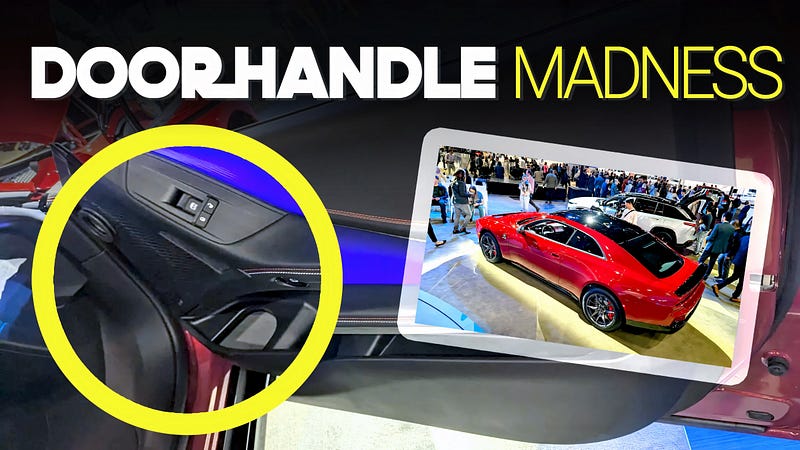
And then a fire starts and Lithium doesn’t wait.
From the outside, bystanders pound on the window, searching for the emergency release — but there isn’t one. Not where it should be. No universal latch, no mechanical fallback. Just software. Just design.
People fumble for a YouTube tutorial while smoke fills the cabin.
We’ve replaced fool-proof with cool-proof; We’ve confused novelty with progress.
That single design decision of a hidden hinge tells the whole story of modern engineering. We built something beautiful and forgot to make it survivable.
That’s amnesia.
The Amnesia
We’re losing the collective memory of how to build things that can’t fail catastrophically. The engineers who carried those scars , the ones who watched shuttles explode and reactors melt are retiring. They built for the worst because they’d seen the worst. They carried fear like a tool.
Now fear is considered a bottleneck.
We’re training the next generation to optimize confidence and automate caution. We’re teaching machines how to design, but we’ve stopped teaching humans to check for the edge cases.
Sometimes I think about the mentors who taught me to fear the small things — the loosened logic, the unchecked assumption. They spoke in cautionary stories, not metrics. One of them used to say, “If you ever stop feeling nervous before a launch, quit the job.”
I miss that kind of fear — the useful kind that kept the rest of us alive.
The FSD Omen
Self-driving cars are the prophecy made visible. They crash because a neural network misreads the world : sunlight on chrome mistaken for motion, a plastic bag mistaken for a human.
That’s a probabilistic failure, not a mechanical one. You can’t fix it with a wrench. You can only hope it doesn’t happen again in quite the same way.
Meanwhile, companies release “beta” versions to the public , hundreds of thousands of unpaid testers rolling through traffic, collecting the edge cases with their lives. A patch comes later. The risk is externalized. The slogan is innovation.
That’s the “missing nail” reborn: not one failure, but a million tiny statistical ones, each waiting for its turn.
The Disappearing Memory
In the 1980s and ’90s, every major engineering discipline still kept its ghosts close. Pilots trained on disaster replays. Civil engineers studied collapse photos until they could smell the concrete dust. NASA ran failure scenarios like rituals. Each lesson carved humility into the next design.
Now, most of that knowledge is buried in corporate vaults, locked behind NDAs, or lost in the noise of “proprietary data.” The general AI systems that design for us don’t even know those files existed. They’ve never read the autopsies. They can model efficiency, but not regret.
So we build again — clean, fast, and forgetful.
Ignorance used to be accidental. Now it’s engineered.
The Cult of Speed
Every warning feels like obstruction now. Every delay feels like death. The investor wants velocity, the press wants novelty, the consumer wants the next thing yesterday. And in that race, we quietly killed the idea that understanding matters.
Agile development, MVP culture, “iterate or die” , all of it assumes the world will forgive the first few explosions. But in the physical world, in the real world, sometimes the first explosion is the last.
We used to test until failure. Now we push until launch.
Regulation is trying to catch up, unevenly. Europe’s AI Act pushes audits before deployment. The U.S. still prizes acceleration over assurance. In Asia, Japan folds ethics into design standards, while China drafts algorithmic accountability laws aimed at transparency. Different strategies, same struggle: how to rebuild restraint in a culture addicted to speed.
The Reckoning of Probability
Probability is seductive because it feels scientific. It gives us confidence without certainty, precision without accountability. But probability isn’t wisdom. It’s statistics pretending to be foresight.
When the next catastrophe comes , and it will, the audit logs will be clean. The AI will insist it acted within acceptable confidence intervals. The company will issue a patch. The headlines will fade. And we’ll move on just a little faster, a little dumber, one nail further from safety.
The Tool Beyond Our Preparation
Maybe that’s what Oppenheimer felt when he watched the sky split open: not guilt, but realization . That the greatest danger wasn’t the bomb itself, but our inability to respect what we’d made.
AI isn’t a villain. It’s a mirror.It reflects our brilliance and our blindness in equal measure. If it destroys us, it won’t be on purpose, at least at its current state. It’ll be an accident, an honest mistake, a nail less.
We are wielding a tool whose power exceeds our preparation. It doesn’t hate us. It doesn’t love us. It simply runs the code and calculate probabilities.
So play. Build, experiment, but treat it like what it is — a loaded equation humming in your hands.
Bring back the old fear. The productive kind. The kind that made engineers check the bolts twice and design the escape hatch where everyone could find it. The kind that whispered, what if we’re wrong?
Because one day, we will be.And when that happens, may someone, somewhere, have remembered to bring an extra nail.